
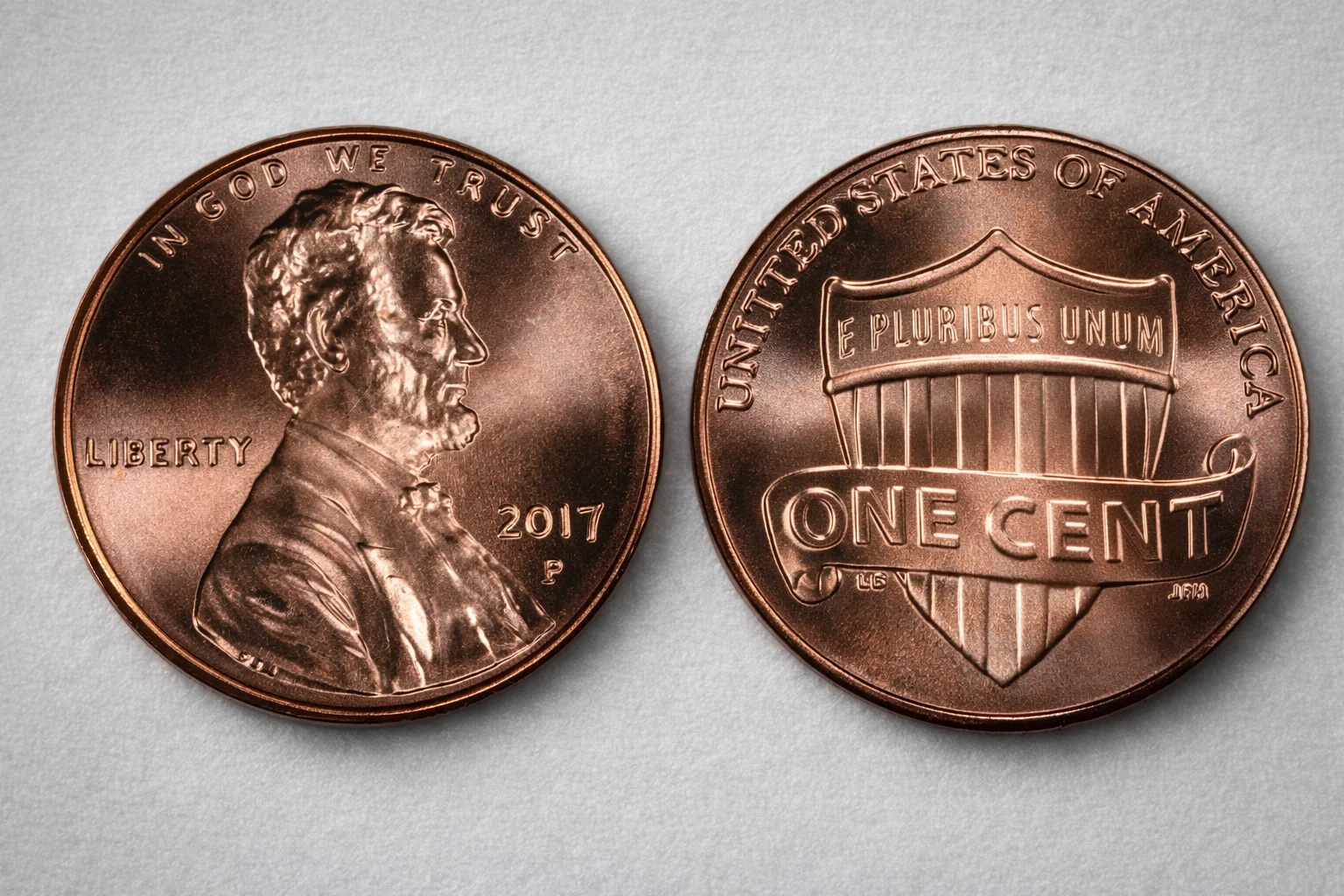
The 2017 p penny value is often searched because this was the first circulating Lincoln cent to carry a Philadelphia mint mark. For one year only, the U.S. Mint added a small “P” under the date. Many collectors saved them. Some expected a future key date. The real question is simple: does it trade above one cent today?
So, let’s look at mintage, condition, auction results, grading levels, and possible errors. and market behavior.
Why 2017 Was Different
In 2017, the U.S. Mint marked the 225th anniversary of its founding. To mark the event, Philadelphia cents received a “P” mint mark for the first time in regular circulation.
Before 2017:
- Philadelphia cents had no mint mark
- Denver used “D”
- San Francisco struck proofs
After 2017:
- Philadelphia returned to no mint mark
That makes 2017 the only circulation Lincoln cent with a “P”.
Important distinction: Unique does not mean scarce.
Basic Specifications
| Feature | Detail |
| Year | 2017 |
| Mint | Philadelphia (P) |
| Composition | Copper-plated zinc |
| Weight | 2.5 g |
| Obverse Design | Abraham Lincoln by Victor D. Brenner |
| Reverse Design | Union Shield (introduced 2010) |
| Diameter | 19.05 mm |
| Edge | Plain |
| Mintage | approx. 4.4 billion |
The obverse retains the classic Lincoln portrait first used in 1909. The reverse features the Union Shield design adopted in 2010. The only visual change in 2017 was the addition of the “P” mint mark below the date.
The mintage exceeded four billion coins. That number alone shapes the market.
The coin is not copper. It has a zinc core with thin copper plating. That matters for grading. Zinc cents show contact marks easily. Surface quality varies.
For quick identification, tools like Coin ID Scanner can help confirm year, mint mark, composition, and general market range from a photo. But remember that the final value always depends on the coin’s grade and other nuances.
Is the 2017 P Penny Rare?
No.
A mintage of more than four billion pieces prevents traditional rarity. The coin was produced for general circulation and distributed nationwide through banks and Federal Reserve channels. It entered daily commerce immediately and remains easy to find in rolls, change jars, and circulation today.
Many collectors mistake a design change for scarcity. A first-year feature often creates attention, but attention does not reduce supply. Production volume determines availability.
The difference is simple:
Being the first year with a mint mark does not mean the coin was produced in small numbers.
The 2017 P cent was the first circulation Lincoln cent to carry a Philadelphia “P,” but more than four billion were struck. Historical uniqueness does not equal low mintage.
Real Market Prices
Auction data and dealer listings show consistent patterns across grades.
| Condition | Typical Market Value |
| Circulated | $0.01 |
| Choice Circulated | $0.01–$0.05 |
| Uncirculated (raw) | $0.05–$0.25 |
| MS65 | $1–$3 |
| MS67 | $10–$25 |
| MS68 | $75+ (conditional rarity) |
Most examples remain at face value because supply far exceeds collector demand. Even lightly worn coins rarely sell above one cent unless included in bulk lots.
Uncirculated pieces bring small premiums when surfaces remain clean and red. Certified coins begin to show measurable value once they reach upper Mint State levels. MS67 pieces attract registry collectors. MS68 coins are rare in certified populations, not because of mintage, but because flawless preservation is difficult.
Premium begins at grade, not at date.
Where the Premium Starts
Modern zinc cents face preservation challenges. The copper plating is thin. Contact marks show easily. High-speed striking and bulk storage cause abrasions before coins even enter circulation.
Three main factors reduce top-grade survival:
- Soft zinc core under a thin copper layer
- High-speed mass production
- Heavy bag contact during transport
MS63 to MS65 examples are abundant. Many can be found in original rolls and mint sets. Prices remain low in this range.
MS67 requires sharper strike detail and cleaner fields. Collectors pay for surface quality. At this level, the coin transitions from common to selective.
MS68 represents conditional rarity. Very few pieces qualify. Certification populations remain low. Auction results show higher realized prices for this grade. However, that applies only to a small fraction of the total mintage.
The market consistently rewards preservation. It does not reward bulk quantity.
Comparing 2017 to Other Modern Cents
The 2009 Bicentennial cents had significantly lower mintages. Some dates from the 1980s and 1990s gained attention because of confirmed doubled dies or transitional composition changes.
The 2017 P cent does not share those traits.
It has:
- No major confirmed doubled die variety
- No transitional metal change
- No documented systemic mint error
Its appeal is based on:
- A one-year Philadelphia mint mark
- Historical anniversary context
It is not supported by rarity, metal variation, or recognized error varieties. That difference explains the stable price structure.
2017 P Penny Errors
Error discussions frequently overstate value. Most examples fall into common production deviations.
Documented minor issues include:
- Small off-center strikes
- Minor die cracks
- Machine doubling
Machine doubling is mechanical. It differs from a true doubled die created during hubbing. It does not carry strong premiums.
No widely recognized major doubled die has been confirmed for the 2017 P cent. No transitional alloy change has been documented. No large-scale misstrike population exists.
High-value errors require:
- Clear and dramatic visual separation
- Independent third-party verification
- Proven auction history
Without those factors, market demand remains limited. Many online listings labeled “rare error” either sell at minimal premiums or fail to sell.
Should You Save Rolls?
In 2017, many collectors saved unopened bank rolls. The mint mark change created early enthusiasm.
Advantages:
- Low acquisition cost
- Easy storage
- Historical uniqueness
Disadvantages:
- Extremely high supply
- Uncertain long-term demand
- Slow turnover in the secondary market
Roll saving works only when long-term scarcity develops. With billions struck, that scenario is difficult. Registry demand might increase top-grade premiums, but raw roll accumulation does not guarantee appreciation.
Saving a few high-quality pieces is practical. Hoarding large quantities assumes future demand growth that is not supported by current population trends.
Long-Term Outlook
The coin holds a permanent place in Lincoln cent history. It marks the first circulation “P” mint mark from Philadelphia. That fact will not change.
It will always represent:
- The only circulation Lincoln cent with a Philadelphia “P”
- A short-term design adjustment
It is unlikely to become:
- A recognized key date
- A low-mintage rarity
Future value will depend on:
- Certified high-grade survival rates
- Registry competition among collectors
- Long-term interest in modern issues
Average circulated pieces will remain face value. Select top-grade coins may hold modest premiums tied to conditional scarcity.
Market Behavior Over Time
Since its release, pricing has followed a predictable pattern.
- Circulated value remained unchanged
- Raw, uncirculated stayed modest
- Certified high grades showed fluctuation
There was early attention in 2017 when the mint mark appeared for the first time. Some speculative buying occurred. Prices adjusted downward once the supply became clear.
The coin now trades like most modern high-mintage issues. The market separates bulk material from exceptional quality.
Condition controls price. Supply controls the ceiling.
FAQs
Why was there a P mint mark in 2017?
The U.S. Mint added it for the 225th anniversary. It marked the first time a circulating cent carried a Philadelphia mint mark.
Is the 2017 P penny rare?
No. Mintage exceeded four billion. It remains common in circulation.
What is the highest recorded sale?
Top certified examples in MS68 have sold for strong premiums compared to face value. Lower grades remain inexpensive.
Should I get mine graded?
Only if the coin appears nearly flawless. Grading fees exceed the value of most examples.
Will it become valuable in the future?
Large mintage limits long-term growth. High-grade specimens may hold registry-set demand. Average coins likely remain face value.
Final Points
The 2017 P Lincoln cent is a modern historic footnote. It marks a unique minting decision. It does not represent scarcity.
Most examples trade at face value. Uncirculated coins carry minor premiums. Only high-grade certified pieces command meaningful prices.
Collectors can include it in type sets and Lincoln series collections. Investors seeking appreciation should focus on conditional rarity, not bulk rolls.
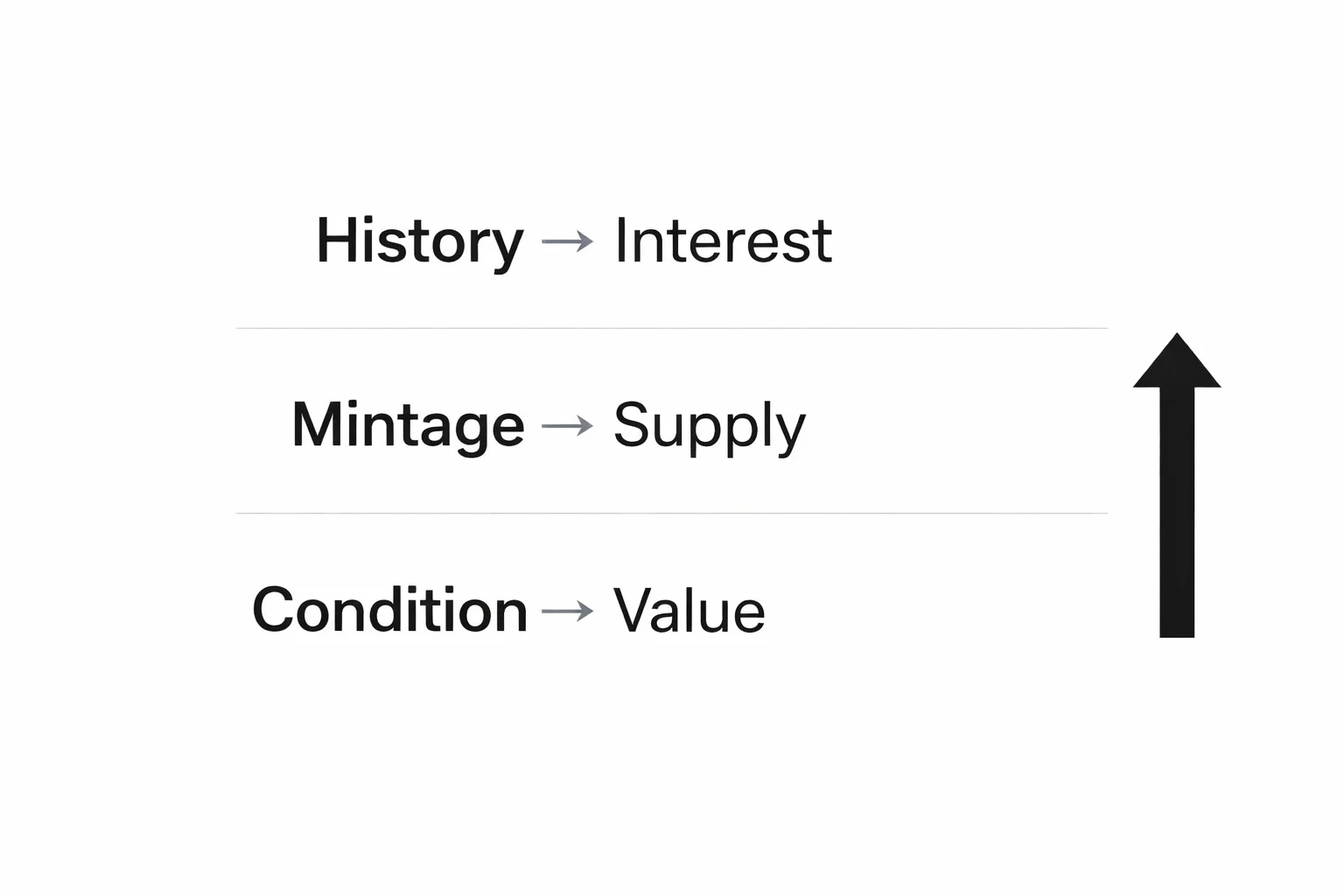
The value story of the 2017 P penny is simple:
- History created interest.
- Mintage is a limited rarity.
- Condition creates value.